Follow the path of lean, create high-quality containers, establish the Huajin brand, and build a century-old enterprise


News Center
News Center
How to operate a thin film evaporator normally?
2021-03-23
Thin-film evaporator This is a type of evaporator characterized by the material liquid flowing in a film along the heating tube wall for heat transfer and evaporation. Its advantages include high heat transfer efficiency, fast evaporation speed, and short material residence time, making it especially suitable for evaporating heat-sensitive materials. Thin-film evaporator The structure includes a motor, reducer, upper mechanical seal, separation cylinder, demister, distributor, main shaft, rotor and scraper, cylinder, jacket, bottom closure head, lower seal, etc.
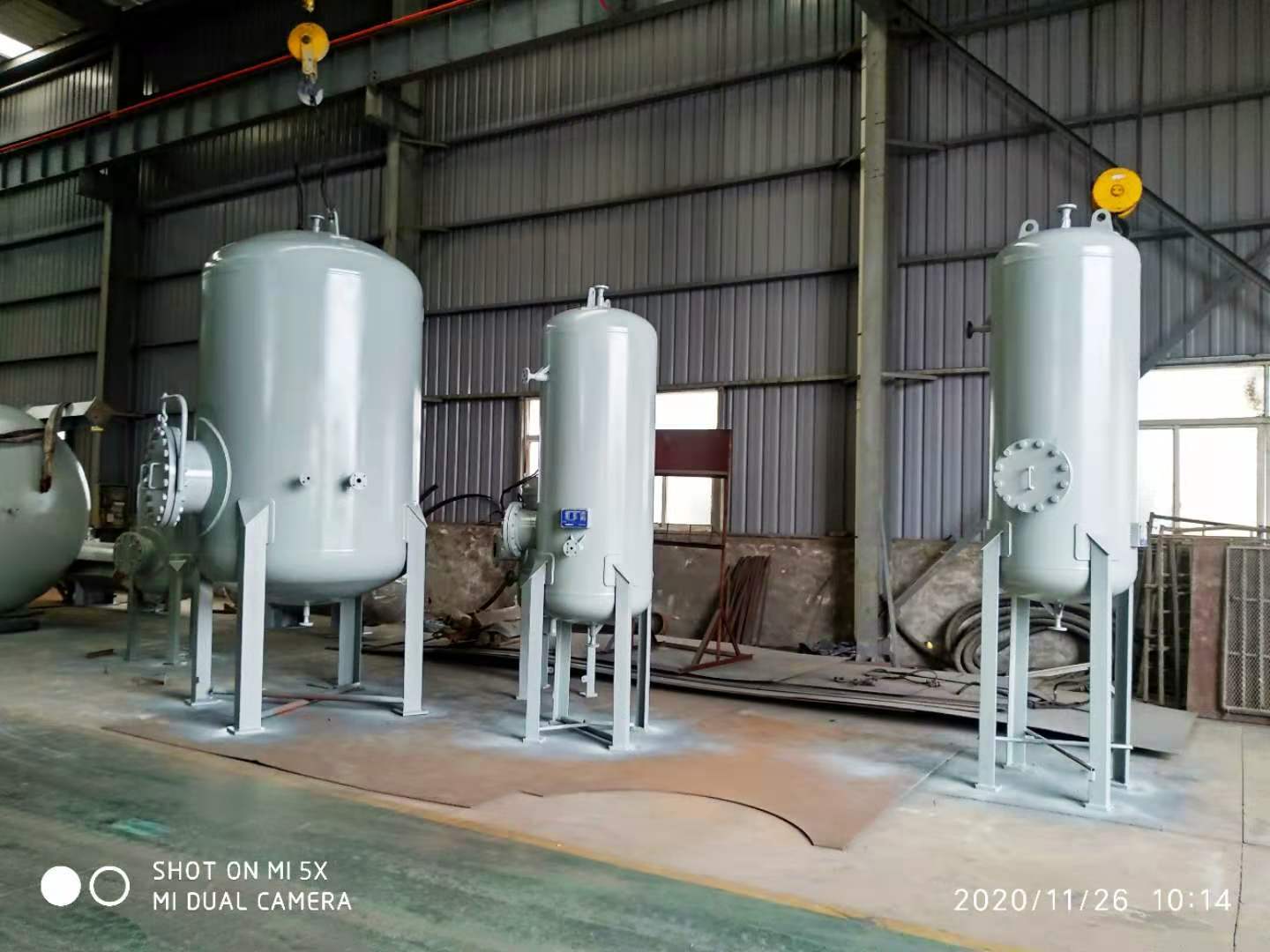
Thin-film evaporator Normal operation? The equipment has undergone a complete test run before leaving the factory. Users can hoist the equipment as a whole onto the equipment foundation. The equipment should be leveled; the leveling position can refer to the plane on the reducer frame. And fix the equipment to the floor or steel frame. For larger equipment, to increase the stability of the equipment, horizontal auxiliary supports can be added to appropriate positions on the bottom flange. The auxiliary support points only limit the radial displacement of the equipment, not its axial displacement. Prepare the pipelines according to the process requirements, remove foreign objects, clean and replace the equipment, and connect the power supply.
First turn on the circulating cooling water pump to put the water jet condenser into operation. Open the concentrate container and vacuum valve. Open the feed valve and use the vacuum to draw the liquid into the equipment from the high-level tank. Connect the power supply and start the rotating Thin-film evaporator motor. Observe whether the motor rotation direction is correct. Slowly open the steam valve to allow steam to enter the jacket. After removing the non-condensable gas in the jacket from the bypass valve, connect the trap. Adjust the steam pressure to around 0.15Mpa.
Observe the discharge situation from the bottom sight glass. Strictly prohibit operation with the equipment full of liquid. After the system stabilizes for 5 minutes, sample and analyze the concentrate concentration. Adjust the opening of the feed valve to make the concentrate reach the required concentration. When the liquid level in the concentrate container is almost full, switch to another container according to the steps. If user conditions permit, increasing the height of the evaporator eliminates the need for two concentrate containers, or a variable-speed pump can directly extract the concentrate.
Previous Page
Previous Page:


Tel:0791-85533866
15070943381/13870615799
Fax:0791-85533868
E-mail:jxhuajin@163.com
Website:http://www.jihuajin.com
Address:Gaqiao Industrial Park, A Area, Jinxian County, Nanchang
Official Number